Are Brown Bears and Grizzly Bears Different? Exploring the Fascinating World of Ursus Arctos
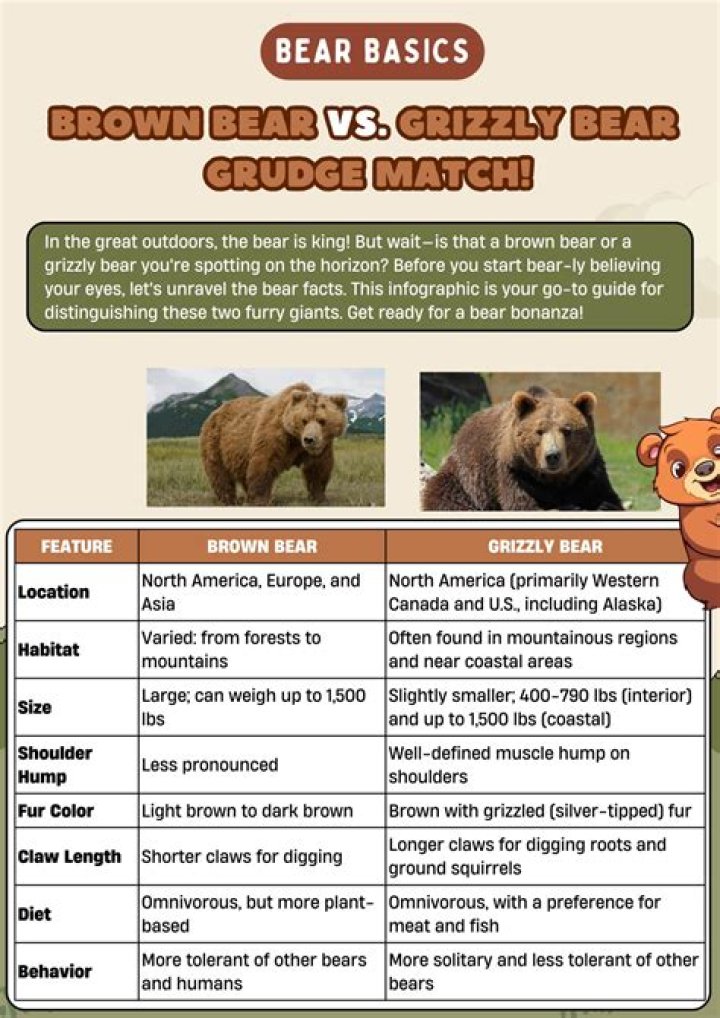
Are brown bears and grizzly bears different? This is a question that has intrigued nature enthusiasts and wildlife experts for years. At first glance, these majestic creatures might seem identical, but a closer look reveals subtle yet significant differences. Understanding these distinctions is key to appreciating the diversity within the bear family.
For many, bears symbolize strength, resilience, and adaptability. Among them, brown bears (Ursus arctos) stand out as one of the most widespread and adaptable species. However, the term "grizzly bear" often comes up in discussions about brown bears, leading to confusion. Are they truly different, or are they simply variations of the same species? In this article, we'll delve into the nuances that set them apart while also exploring their shared characteristics.
Whether you're a wildlife enthusiast, a student of biology, or simply curious about nature, this article will provide you with a comprehensive understanding of brown bears and grizzly bears. By the end, you'll have a clearer picture of their similarities and differences, as well as the ecological roles they play in their respective habitats.
Introduction to Brown Bears and Grizzly Bears
Understanding Ursus Arctos
Brown bears and grizzly bears belong to the same species, Ursus arctos, but they differ in several ways depending on their geographic location and environmental conditions. The term "grizzly bear" is commonly used in North America to describe a specific subspecies of brown bear, Ursus arctos horribilis. This distinction is crucial for understanding their unique adaptations and roles in the ecosystem.
Brown bears are found across the Northern Hemisphere, from North America to Europe and Asia. Their adaptability allows them to thrive in diverse environments, ranging from dense forests to open tundra. Grizzly bears, on the other hand, are primarily associated with the rugged landscapes of North America, particularly in Alaska, Canada, and parts of the contiguous United States.
Taxonomy and Classification
The classification of brown bears and grizzly bears is rooted in scientific taxonomy. Both are part of the Ursidae family, which includes other bear species such as black bears and polar bears. Within Ursus arctos, there are several subspecies, each with its own unique traits:
- Ursus arctos horribilis: Grizzly bears in North America.
- Ursus arctos arctos: European brown bears.
- Ursus arctos lasiotus: Kodiak bears, found in Alaska.
These subspecies reflect the genetic diversity within the species, shaped by geographical isolation and environmental pressures.
Physical Traits and Characteristics
Size and Appearance
Brown bears and grizzly bears share many physical characteristics, but there are notable differences:
- Size: Grizzly bears tend to be smaller than other brown bear subspecies, such as the Kodiak bear.
- Coat Color: Both have a range of coat colors, from light blonde to dark brown, but grizzlies often exhibit a distinctive "grizzled" appearance due to silver-tipped hairs.
- Shoulder Hump: Both species have a prominent shoulder hump, but it is more pronounced in grizzlies.
These physical traits are adaptations to their respective environments, allowing them to survive and thrive in challenging conditions.
Habitat and Distribution
Where Do They Live?
The habitat of brown bears and grizzly bears varies widely:
- Brown Bears: Found in Europe, Asia, and North America, brown bears occupy a range of environments, including forests, mountains, and tundra.
- Grizzly Bears: Primarily inhabit the wilderness areas of North America, with significant populations in Alaska, Canada, and parts of the contiguous U.S.
Both species require large territories to support their dietary needs and reproductive cycles. Conservation efforts are essential to protect their habitats from human encroachment and climate change.
Diet and Feeding Habits
Omnivorous Adaptations
Brown bears and grizzly bears are omnivores, meaning they consume both plant and animal matter. Their diet includes:
- Fruits and berries
- Nuts and seeds
- Fish, particularly salmon during spawning season
- Insects and small mammals
Grizzlies in North America are particularly known for their salmon fishing skills, which play a crucial role in their diet and overall health.
Behavior and Social Structure
Solitary but Social
Despite being solitary animals, brown bears and grizzlies exhibit complex social behaviors:
- Maternal Care: Female bears are fiercely protective of their cubs, which stay with them for up to three years.
- Territorial Behavior: Males establish large territories, which may overlap with those of other bears.
- Seasonal Gatherings: During salmon runs, bears congregate in large numbers, displaying fascinating social interactions.
Understanding their behavior is essential for effective conservation and human-bear conflict management.
Key Differences Between Brown and Grizzly Bears
Subtle but Significant
While brown bears and grizzly bears share many similarities, there are key differences:
- Geographic Location: Grizzlies are primarily found in North America, while brown bears have a broader distribution.
- Physical Features: Grizzlies often have a more pronounced shoulder hump and grizzled fur.
- Ecological Role: Grizzlies play a vital role in nutrient cycling in North American ecosystems, particularly through salmon consumption.
These differences highlight the importance of recognizing subspecies within the broader category of brown bears.
Conservation Status and Threats
Protecting These Majestic Creatures
Both brown bears and grizzly bears face numerous threats:
- Habitat Loss: Human development and deforestation reduce their natural habitats.
- Climate Change: Alterations in ecosystems affect their food sources and breeding patterns.
- Human-Wildlife Conflict: Encounters with humans can lead to bear fatalities or relocation.
Conservation efforts, such as protected areas and anti-poaching laws, are crucial for ensuring their survival in the wild.
Common Myths and Misconceptions
Separating Fact from Fiction
There are several misconceptions about brown and grizzly bears:
- Myth: Grizzlies are More Aggressive: While they can be defensive, aggression is often a response to perceived threats rather than inherent nature.
- Myth: They Only Eat Meat: As omnivores, their diet is diverse and includes a wide range of plant and animal matter.
Dispelling these myths is essential for fostering a better understanding and appreciation of these incredible animals.
Conclusion and Final Thoughts
In conclusion, the question "Are brown bears and grizzly bears different?" can be answered with a nuanced understanding of their shared species and distinct subspecies characteristics. While they belong to the same species, Ursus arctos, their geographic distribution, physical traits, and ecological roles set them apart in fascinating ways.
We invite you to share your thoughts and questions in the comments section below. Additionally, explore our other articles on wildlife conservation and nature to deepen your knowledge. Together, we can make a difference in protecting these magnificent creatures for future generations.