Billy Mitchell Court Martial: A Comprehensive Analysis of the Controversial Military Case
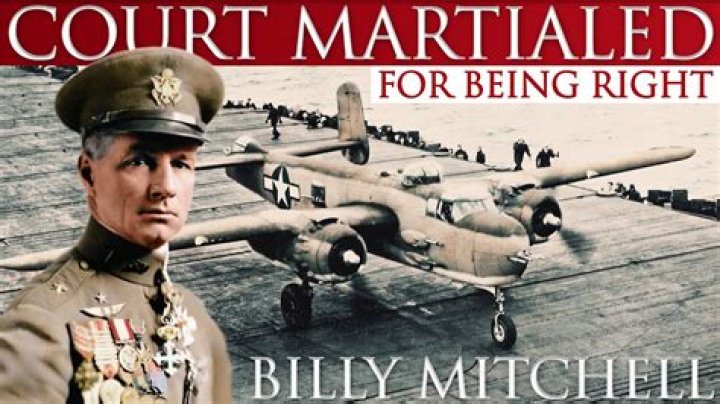
Billy Mitchell court martial remains one of the most debated military trials in American history, shaping military aviation policy and doctrine for generations to come. This case not only changed the trajectory of military aviation but also became a symbol of the struggle between tradition and innovation in military strategy. Understanding the nuances of this trial requires an in-depth exploration of the historical context, key events, and the lasting legacy it left behind.
General Billy Mitchell, a visionary advocate for air power, faced a court-martial that polarized the military community and the public alike. His bold stance on the importance of air superiority clashed with the traditionalist views of his superiors, leading to a dramatic showdown that tested the limits of military discipline and free speech.
This article provides a detailed examination of the Billy Mitchell court martial, exploring its historical background, the charges brought against Mitchell, the trial proceedings, and its long-term implications. By understanding this pivotal moment in military history, we can better appreciate the evolution of air power and the challenges faced by innovators in the military establishment.
Biography of Billy Mitchell
Billy Mitchell's Early Life and Career
William "Billy" Mitchell, born on December 29, 1879, in Nice, France, grew up in a family deeply rooted in military tradition. His father, John Mitchell, was a U.S. Senator from Wisconsin, which exposed Billy to political and military circles from an early age. Mitchell joined the U.S. Army during the Spanish-American War in 1898 and quickly rose through the ranks due to his exceptional leadership skills.
His career took a pivotal turn when he became interested in aviation. In 1917, during World War I, Mitchell was appointed as the chief of the Air Service of the American Expeditionary Force. His experiences in Europe solidified his belief in the transformative power of air power in modern warfare.
Biodata of Billy Mitchell
| Full Name | William "Billy" Mitchell |
|---|---|
| Birthdate | December 29, 1879 |
| Birthplace | Nice, France |
| Death | February 19, 1936, New York City, USA |
| Occupation | U.S. Army General, Aviation Pioneer |
Historical Context
Understanding the Billy Mitchell court martial requires an appreciation of the post-World War I era. During this period, the U.S. military was grappling with the transition from traditional warfare to modern, technologically advanced strategies. Aviation, in particular, was a contentious issue, with many senior officers skeptical of its utility beyond reconnaissance.
Mitchell's advocacy for air power clashed with the entrenched views of the War Department, which prioritized ground forces and naval power. His vocal criticism of military leadership and his public advocacy for a separate air force set the stage for a dramatic confrontation.
The Accusation
Charges Against Billy Mitchell
In 1925, Mitchell was charged with insubordination under Article 96 of the Articles of War. The charges stemmed from his public statements criticizing the War Department and Navy leadership, particularly following the crash of the Navy airship Shenandoah. Mitchell accused the leadership of "almost treasonable administration of the national defense" and claimed that their neglect of aviation was endangering national security.
These bold accusations, while rooted in his genuine concerns, crossed the line of acceptable military conduct, leading to his court-martial.
Trial Proceedings
Key Events in the Trial
The court-martial proceedings began on October 28, 1925, in Washington, D.C. The trial lasted for several weeks and attracted significant media attention. Mitchell defended himself by presenting evidence of the inadequacies of military aviation and the dangers posed by outdated strategies.
Despite his compelling arguments, the court found him guilty on December 17, 1925, and sentenced him to a five-year suspension from duty without pay. However, the sentence was later modified to allow him half pay, reflecting the divided opinions within the military establishment.
Key Players in the Trial
Notable Figures
- General Billy Mitchell: The central figure whose outspoken advocacy led to his trial.
- General Douglas MacArthur: Served as the judge advocate general during the trial.
- General Leonard Wood: Presiding officer of the court-martial board.
These figures played crucial roles in shaping the outcome of the trial, with some sympathizing with Mitchell's vision and others upholding traditional military values.
Media Coverage and Public Reaction
Public Opinion and Media Influence
The trial received extensive media coverage, with newspapers and magazines across the country following the proceedings closely. Public opinion was divided, with many Americans sympathetic to Mitchell's cause and viewing him as a martyr for progress.
Journalists like Lowell Thomas and Edward R. Murrow played pivotal roles in shaping public perception, highlighting Mitchell's visionary ideas and the bureaucratic resistance he faced. This media attention helped elevate Mitchell's status as a symbol of innovation in military strategy.
Legal Implications
Impact on Military Law
The Billy Mitchell court martial had far-reaching implications for military law and policy. It highlighted the tension between free speech and military discipline, prompting discussions on the balance between personal expression and institutional loyalty.
Mitchell's case also underscored the need for a more robust framework for addressing dissent within the military ranks, influencing future reforms in military justice.
Legacy of the Court Martial
Long-Term Impact on Military Aviation
Although Mitchell's career ended prematurely due to the court martial, his ideas laid the foundation for the development of modern air power. The establishment of the United States Air Force in 1947 can be traced back to his relentless advocacy for a separate and independent air service.
His vision for strategic bombing and air superiority influenced military strategists worldwide, shaping the doctrine of air warfare for decades to come.
Lessons Learned
Insights from the Trial
- Importance of Innovation: The trial underscores the critical role of innovation in military strategy and the challenges faced by visionaries within bureaucratic systems.
- Balance of Free Speech: It highlights the delicate balance between free speech and institutional loyalty in military settings.
- Legacy of Advocacy: Mitchell's story serves as a reminder of the lasting impact of principled advocacy, even in the face of adversity.
These lessons continue to resonate in contemporary discussions on military reform and the role of dissent in institutional settings.
Conclusion
The Billy Mitchell court martial remains a defining moment in military history, encapsulating the struggle between tradition and innovation. Through his unwavering commitment to the advancement of air power, Mitchell left an indelible mark on military strategy and doctrine.
We invite you to share your thoughts on this pivotal moment in history. Engage with us by leaving a comment or exploring other articles that delve into the rich tapestry of military history. Together, we can continue to learn from the past and shape a better future.
For further reading, consider exploring the extensive archives and scholarly works available through reputable sources such as the U.S. National Archives and academic journals dedicated to military history.