El Chapo and Pablo Escobar: A Comparative Analysis of Two Infamous Drug Lords
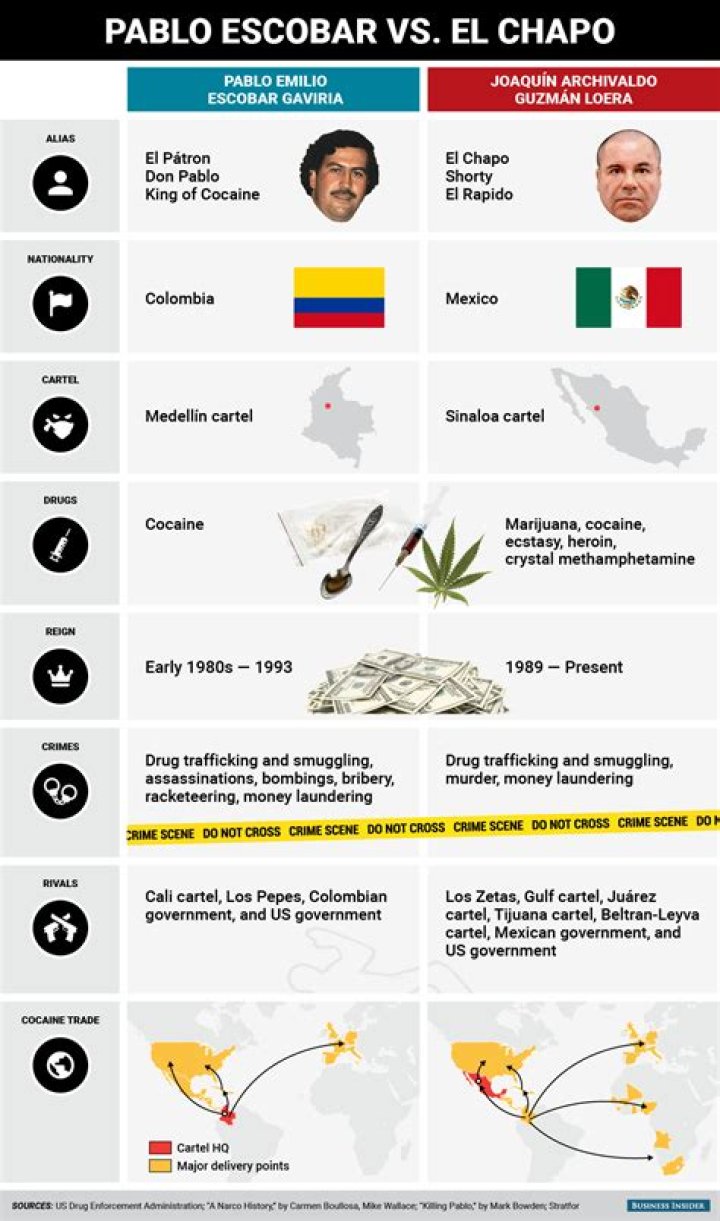
The world of drug cartels has been dominated by two legendary figures: El Chapo and Pablo Escobar. Both names evoke a sense of fear, power, and notoriety in the global underworld. Their stories have been immortalized in books, documentaries, and even TV series, leaving a lasting impact on the history of organized crime. In this article, we will delve into the lives, legacies, and differences between these two infamous drug lords.
El Chapo and Pablo Escobar represent two distinct eras in the history of drug trafficking. While both men achieved immense wealth and power through their criminal enterprises, their methods, motivations, and ultimate downfalls differed significantly. Understanding their stories provides valuable insights into the dynamics of organized crime and the consequences of unchecked power.
This article will explore their biographies, operations, and the impact they had on society. By comparing and contrasting their lives, we hope to shed light on the complexities of their criminal empires and the lessons that can be learned from their rise and fall.
Biography of El Chapo and Pablo Escobar
Biographical Details
El Chapo, whose real name is Joaquín Archivaldo Guzmán Loera, was born on April 4, 1957, in La Tuna, Sinaloa, Mexico. He became one of the most powerful drug traffickers in history, leading the Sinaloa Cartel. Pablo Escobar, on the other hand, was born on December 1, 1949, in Rionegro, Antioquia, Colombia. He founded and led the Medellín Cartel, which dominated the cocaine trade during the 1980s.
| Name | El Chapo | Pablo Escobar |
|---|---|---|
| Full Name | Joaquín Archivaldo Guzmán Loera | Pablo Emilio Escobar Gaviria |
| Date of Birth | April 4, 1957 | December 1, 1949 |
| Place of Birth | La Tuna, Sinaloa, Mexico | Rionegro, Antioquia, Colombia |
| Cartel | Sinaloa Cartel | Medellín Cartel |
Early Life and Background
El Chapo grew up in a rural farming community in Sinaloa, Mexico, where his family was involved in farming marijuana and opium poppies. This early exposure to the drug trade shaped his future career. Similarly, Pablo Escobar's early life was marked by poverty and hardship. He began his criminal career as a smuggler, stealing gravestones and selling contraband items.
Building Their Criminal Empires
El Chapo's Sinaloa Cartel
El Chapo's rise to power began in the late 1980s when he became a key player in the Guadalajara Cartel. After the cartel's dissolution, he formed the Sinaloa Cartel, which became one of the most powerful drug trafficking organizations in the world. The cartel's operations spanned across multiple countries, supplying vast quantities of illegal drugs to the United States and beyond.
Pablo Escobar's Medellín Cartel
Pablo Escobar's Medellín Cartel was responsible for supplying over 80% of the world's cocaine during its peak. He employed a combination of violence, bribery, and political influence to maintain control over his empire. Escobar's cartel was notorious for its brutal tactics, including assassinations and bombings.
Operational Methods and Tactics
Both El Chapo and Pablo Escobar employed distinct methods to expand and protect their criminal enterprises. El Chapo relied heavily on sophisticated logistics, including an extensive network of tunnels and secret routes. On the other hand, Escobar used fear and intimidation to assert his dominance, earning him the nickname "The King of Cocaine."
- El Chapo: Focus on logistics and innovation.
- Pablo Escobar: Use of violence and political influence.
Rise to Notoriety
The notoriety of El Chapo and Pablo Escobar grew as their empires expanded. El Chapo became infamous for his numerous prison escapes, including a daring escape from a maximum-security prison in a laundry cart in 2001 and a later escape through a tunnel in 2015. Pablo Escobar's infamy was cemented by his violent confrontations with the Colombian government and his construction of the luxurious La Catedral prison.
Downfall and Capture
Despite their immense power, both El Chapo and Pablo Escobar eventually faced their downfall. El Chapo was captured multiple times, with his final capture occurring in 2016. He was later extradited to the United States, where he was sentenced to life in prison. Pablo Escobar's reign ended tragically on December 2, 1993, when he was killed during a shootout with Colombian police.
Legacy and Impact
El Chapo's Legacy
El Chapo's legacy is marked by his resilience and adaptability in the face of law enforcement. His story has inspired numerous documentaries and TV series, highlighting the complexities of modern drug trafficking.
Pablo Escobar's Legacy
Pablo Escobar's legacy is one of violence and power. His actions had a profound impact on Colombia, leading to significant social and political changes. Despite his brutal methods, some Colombians remember him as a Robin Hood figure who provided for the poor.
Comparison Between El Chapo and Pablo Escobar
While both El Chapo and Pablo Escobar were powerful drug lords, their approaches and legacies differ significantly. El Chapo's focus on logistics and innovation contrasts with Escobar's reliance on violence and intimidation. Additionally, their cultural impacts and public perceptions vary greatly.
Representation in Media
The stories of El Chapo and Pablo Escobar have been extensively covered in media, including TV series like "Narcos" and "El Chapo." These portrayals have helped shape public perception and provided insights into the world of drug trafficking. However, it is essential to critically evaluate these representations and separate fact from fiction.
Conclusion and Final Thoughts
El Chapo and Pablo Escobar are two of the most infamous drug lords in history, each leaving a lasting impact on the world of organized crime. Their stories serve as cautionary tales about the dangers of unchecked power and the consequences of criminal activity. By understanding their lives and legacies, we can gain valuable insights into the dynamics of the drug trade and the importance of addressing its root causes.
We invite you to share your thoughts and opinions in the comments section below. Additionally, explore our other articles to learn more about related topics. Together, we can continue the conversation and strive for a better understanding of the complex issues surrounding organized crime and drug trafficking.
References:
- United Nations Office on Drugs and Crime (UNODC)
- Drug Enforcement Administration (DEA)
- Historical records and academic studies on drug cartels