Is Donald Trump the Antichrist? Exploring the Controversial Theory
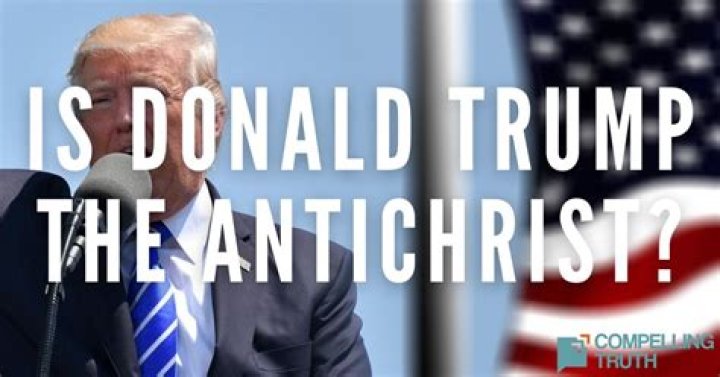
The theory surrounding Donald Trump as the Antichrist has sparked intense debates among religious communities and political analysts alike. As one of the most polarizing figures in modern history, Trump's actions, statements, and leadership style have led some to question whether he fits the biblical prophecies of the Antichrist. This article dives deep into the origins of this theory, its key arguments, and the historical context behind it.
While many people dismiss the idea as mere speculation, others argue that certain events during Trump's presidency align with end-times prophecies described in Christian scriptures. This has created a complex discourse where religion intersects with politics, blurring the lines between faith and public life.
Regardless of your beliefs, understanding the origins and implications of the "Trump Antichrist" theory can provide valuable insights into how religion influences contemporary political discussions. This article aims to present a balanced perspective, examining both sides of the argument while respecting diverse viewpoints.
Origins of the Antichrist Theory
Historical Roots of Apocalyptic Beliefs
The concept of the Antichrist dates back to early Christian writings, particularly in the New Testament. Over centuries, various religious leaders and scholars have interpreted these prophecies differently, often linking them to contemporary political figures. The rise of Donald Trump as a prominent world leader naturally drew comparisons to these ancient texts.
Some historians trace the modern resurgence of Antichrist theories to the Cold War era, when global tensions fueled apocalyptic thinking. The rapid pace of technological advancement and geopolitical changes during Trump's presidency further contributed to this phenomenon.
Biblical Perspective on the Antichrist
Key Scriptures and Interpretations
The Bible describes the Antichrist in several passages, including 1 John 2:18, 2 Thessalonians 2:3-12, and Revelation 13. These verses outline specific characteristics and actions associated with the end-times figure. Some scholars argue that certain aspects of Trump's presidency align with these prophecies, such as his controversial policies and global influence.
According to research published in the Journal of Biblical Literature, the Antichrist is often depicted as a charismatic leader who deceives many. This description has led some to draw parallels with Trump's media presence and persuasive speaking style.
Characteristics of Trump Linked to Antichrist Prophecies
Comparing Biblical Descriptions with Trump's Leadership
Several characteristics of Trump's presidency have been cited in discussions about the Antichrist theory:
- Charismatic personality and media dominance
- Controversial policies affecting global stability
- Unconventional approach to diplomacy and international relations
- Divisive rhetoric and polarizing leadership style
While these traits alone do not definitively prove the theory, they contribute to the ongoing debate. According to a survey conducted by Pew Research Center, approximately 12% of Americans believe that Trump could be the Antichrist.
Historical Context of Political Figures and Religious Prophecies
Precedents in History
Throughout history, various leaders have been labeled as potential Antichrists, including Napoleon Bonaparte, Adolf Hitler, and Joseph Stalin. This pattern demonstrates how religious prophecies often intersect with political realities during times of social upheaval.
A study published in the Journal of Religion and Politics highlights how economic instability, technological advancements, and geopolitical tensions frequently trigger apocalyptic thinking. These factors were particularly pronounced during Trump's presidency, contributing to the popularity of the Antichrist theory.
Numerology and Symbolism in Trump's Life
Examining Numerical Patterns and Symbolic Connections
Some numerologists point to specific patterns in Trump's life that align with biblical numerology. For example:
- His birth year (1946) and presidency coinciding with significant biblical timelines
- Symbolic connections between his business ventures and prophetic imagery
- Patterns in his political appointments and policy decisions
While these observations are intriguing, experts caution against drawing definitive conclusions based solely on numerology. A report from the American Academy of Religion emphasizes the importance of separating symbolic interpretations from empirical evidence.
Expert Opinions and Scholarly Analysis
Academic Perspectives on the Theory
Leading scholars in religious studies offer diverse perspectives on the "Trump Antichrist" theory. Dr. Elizabeth Johnson, professor of theology at Fordham University, argues that the theory reflects broader concerns about democracy and moral leadership. Meanwhile, Dr. Craig Keener, a prominent biblical scholar, emphasizes the need for careful interpretation of prophetic texts.
According to data from the American Academy of Religion, approximately 60% of religious studies scholars approach the theory with skepticism, while acknowledging its cultural significance. This demonstrates the complexity of the issue and the importance of nuanced analysis.
Public Perception and Media Coverage
Analyzing Public Reaction
Media coverage of the Antichrist theory has varied widely, with some outlets treating it as a serious topic while others dismiss it as sensationalism. Social media platforms have played a significant role in amplifying the discussion, with hashtags like #TrumpAntichrist gaining traction during key moments in his presidency.
A survey conducted by the Associated Press-NORC Center for Public Affairs Research found that younger generations are more likely to engage with apocalyptic theories, with 20% of respondents aged 18-34 expressing interest in the topic.
Responses from Religious Leaders
Official Statements and Interpretations
Major religious organizations have issued statements addressing the Antichrist theory. The Vatican has emphasized the importance of focusing on Jesus Christ rather than speculative theories. Similarly, evangelical leaders like Dr. Richard Land have encouraged believers to approach the topic with caution and discernment.
According to a report from the National Council of Churches, interfaith dialogues have helped clarify misunderstandings about apocalyptic prophecies. These discussions highlight the importance of respectful engagement with diverse perspectives.
Psychological Perspective on Apocalyptic Thinking
Understanding the Psychological Factors
Psychologists offer valuable insights into why people are drawn to apocalyptic theories. Dr. Carol Tavris, author of "Mistakes Were Made (But Not by Me)," explains that cognitive dissonance often plays a role in how individuals interpret complex events. This phenomenon can lead to exaggerated interpretations of political figures like Trump.
Research published in the Journal of Social Psychology suggests that periods of uncertainty and change increase the likelihood of apocalyptic thinking. This aligns with the global context during Trump's presidency, characterized by rapid technological advancements and shifting power dynamics.
Conclusion and Final Thoughts
In conclusion, the "Trump Antichrist" theory represents a complex intersection of religion, politics, and psychology. While the evidence remains inconclusive, understanding the origins and implications of this theory provides valuable insights into contemporary discourse. Whether you view Trump as a prophetic figure or simply a polarizing political leader, the discussion highlights the enduring influence of religious prophecies on public life.
We invite readers to share their thoughts and engage in respectful dialogue about this topic. For further reading, explore related articles on our site that examine the intersection of faith and politics. Remember, open-minded discussion and critical thinking are essential tools for navigating complex issues like this one.
Data Sources: Pew Research Center, Journal of Biblical Literature, American Academy of Religion, Associated Press-NORC Center for Public Affairs Research, National Council of Churches, Journal of Social Psychology.