Understanding the Difference Between MBR and GPT: A Comprehensive Guide
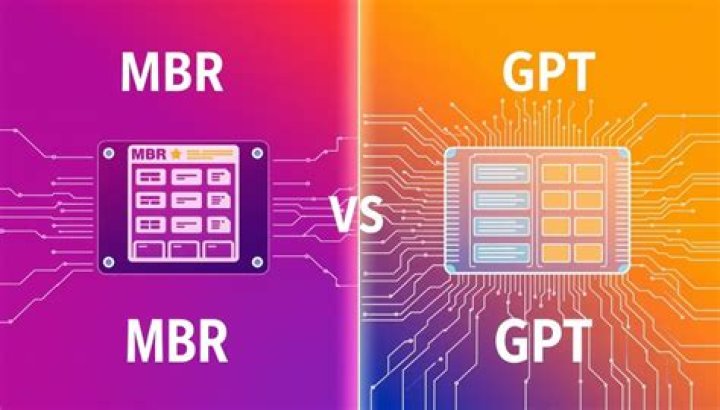
In today's digital age, understanding the technical aspects of disk partitioning is crucial for managing storage devices effectively. Two of the most widely used partitioning schemes are MBR (Master Boot Record) and GPT (GUID Partition Table). While both serve the purpose of organizing data on a disk, they have distinct differences that impact performance, compatibility, and scalability.
As technology evolves, the demand for more efficient and reliable disk management systems increases. Whether you're a tech enthusiast, an IT professional, or simply someone looking to upgrade your computer's storage, knowing the difference between MBR and GPT is essential. This guide will delve into the intricacies of both systems, helping you make informed decisions.
Throughout this article, we will explore the fundamental concepts of MBR and GPT, their advantages and disadvantages, and how to choose the right one for your needs. By the end of this read, you'll have a clear understanding of which partitioning scheme suits your requirements best.
Introduction to MBR and GPT
When it comes to disk partitioning, MBR and GPT are two prominent systems that have revolutionized how data is organized on storage devices. MBR, introduced in the 1980s, has been the standard for decades. However, with the advent of larger drives and advanced operating systems, GPT emerged as a more modern and robust alternative.
The primary function of both MBR and GPT is to define how data is structured on a disk. While MBR is simpler and widely supported, GPT offers enhanced features such as increased partition limits and improved data integrity. Understanding these systems is vital for optimizing storage performance and ensuring compatibility with modern hardware.
History of Disk Partitioning
Disk partitioning has come a long way since its inception. Initially, early computers used flat file systems without any partitioning. As storage capacities grew, the need for organizing data became apparent. This led to the development of partitioning schemes like MBR, which became the industry standard.
Evolution of Partitioning Systems
- Flat File Systems: No partitioning, limited scalability.
- MBR: Introduced in the 1980s, became the standard for decades.
- GPT: Developed in the early 2000s as part of the UEFI standard, designed for modern systems.
Each system has its own strengths and weaknesses, but GPT represents a significant leap forward in terms of functionality and reliability.
What is MBR?
MBR, or Master Boot Record, is a partitioning scheme that has been the backbone of disk management for over three decades. It is a small section of the disk that contains information about how the disk is partitioned and where the operating system is located.
Key features of MBR include:
- Supports up to four primary partitions.
- Limited to 2TB disk size.
- Widely supported by older operating systems and hardware.
Despite its limitations, MBR remains a reliable choice for many users, especially those with legacy systems.
What is GPT?
GPT, or GUID Partition Table, is a more advanced partitioning scheme introduced as part of the UEFI standard. It addresses many of the limitations of MBR, offering greater flexibility and reliability.
Key features of GPT include:
- Supports up to 128 partitions.
- Handles disks larger than 2TB.
- Includes redundant backup tables for enhanced data integrity.
GPT is the preferred choice for modern systems, providing better performance and scalability.
Key Differences Between MBR and GPT
The differences between MBR and GPT go beyond just partition limits and disk size. Below are some critical distinctions:
Partition Limits
MBR allows for a maximum of four primary partitions, while GPT supports up to 128 partitions, making it ideal for complex storage configurations.
Disk Size
MBR is limited to 2TB, whereas GPT can handle disks of virtually any size, accommodating the ever-increasing storage demands of modern technology.
Data Integrity
GPT includes multiple backup tables, ensuring data recovery in case of corruption. MBR, on the other hand, lacks this feature, making it more vulnerable to data loss.
Advantages and Disadvantages
Both MBR and GPT have their pros and cons. Below is a detailed analysis:
Advantages of MBR
- Wide compatibility with older systems.
- Simplicity in implementation.
Disadvantages of MBR
- Limited partition and disk size.
- Higher risk of data loss due to lack of redundancy.
Advantages of GPT
- Supports larger disks and more partitions.
- Enhanced data protection through backup tables.
Disadvantages of GPT
- Less compatible with older hardware and operating systems.
- May require additional setup for legacy systems.
Compatibility Issues
One of the primary concerns when choosing between MBR and GPT is compatibility. While GPT is the preferred choice for modern systems, it may not work seamlessly with older hardware or operating systems.
Operating System Compatibility
Windows, macOS, and Linux all support GPT, but older versions of Windows may require additional configuration. Similarly, some legacy BIOS systems may not fully support GPT, necessitating the use of UEFI firmware.
How to Convert MBR to GPT
Converting a disk from MBR to GPT can unlock its full potential, especially for larger drives. However, the process requires careful planning to avoid data loss.
Steps to Convert MBR to GPT
- Backup all important data on the disk.
- Use a disk management tool like DiskPart or third-party software.
- Follow the conversion steps, ensuring no partitions remain on the disk during the process.
- Repartition the disk as needed after conversion.
It's crucial to verify compatibility with your operating system and hardware before proceeding with the conversion.
Choosing the Right Partition Scheme
Selecting the appropriate partition scheme depends on various factors, including the size of your disk, the operating system you're using, and your hardware configuration.
Considerations for Choosing MBR
- Legacy systems with older hardware.
- Disks smaller than 2TB.
Considerations for Choosing GPT
- Modern systems with UEFI firmware.
- Disks larger than 2TB.
Assessing your specific needs and system requirements will help you make the right decision.
Conclusion and Next Steps
In conclusion, understanding the difference between MBR and GPT is essential for anyone managing storage devices. While MBR remains a reliable option for legacy systems, GPT offers superior performance and scalability for modern technology. By evaluating your needs and considering compatibility, you can choose the partition scheme that best suits your requirements.
We encourage you to share this article with others who may find it useful. For more insights into technology and storage management, explore our other articles. Don't hesitate to leave a comment or ask questions below. Your feedback helps us improve and provide even more valuable content in the future!