What is RBF: Understanding the Role of Radial Basis Function in Machine Learning
Radial Basis Function (RBF) is a powerful mathematical tool used in various fields, particularly in machine learning and data modeling. It plays a critical role in creating models that can approximate complex functions and patterns. If you're exploring machine learning algorithms or neural networks, understanding RBF is essential for optimizing performance and accuracy.
In today's fast-paced world of artificial intelligence, the demand for advanced algorithms capable of handling complex datasets continues to grow. RBF emerges as one of the key solutions, offering flexibility and precision in function approximation. This article will delve into the intricacies of RBF, its applications, and how it can revolutionize machine learning models.
Whether you're a beginner or an experienced data scientist, this comprehensive guide will provide valuable insights into RBF. By the end of this article, you'll have a clear understanding of how RBF works, its advantages, and its practical applications in real-world scenarios.
Here’s a detailed table of contents to guide you through this article:
- Introduction to RBF
- How RBF Works
- RBF in Machine Learning
- RBF Neural Networks
- Advantages of RBF
- Limitations of RBF
- RBF vs Other Models
- Applications of RBF
- Implementing RBF
- Future of RBF
Introduction to RBF
Radial Basis Function (RBF) refers to a type of function that depends only on the distance from a central point. This concept is widely used in interpolation, approximation, and classification problems. RBF is particularly effective in scenarios where data points are non-linearly distributed.
At its core, RBF operates by mapping input data into a higher-dimensional space, where it becomes easier to identify patterns and relationships. The function's radial nature ensures that it is symmetric around a central point, making it ideal for modeling complex datasets.
One of the key benefits of RBF is its ability to handle high-dimensional data efficiently. This makes it a popular choice in machine learning algorithms, where data complexity often poses significant challenges. By leveraging RBF, models can achieve higher accuracy and better generalization.
How RBF Works
RBF operates through a series of mathematical steps that transform input data into a more interpretable format. Below are the key components of the RBF process:
- Center Selection: RBF requires the selection of central points, often referred to as "centers." These centers are typically chosen based on the distribution of input data.
- Distance Calculation: Once the centers are defined, the distance between each data point and the centers is calculated using a chosen metric, such as Euclidean distance.
- Activation Function: The calculated distances are then passed through an activation function, which determines the output value. Common activation functions include Gaussian and Multiquadric.
- Output Combination: Finally, the outputs from each center are combined using a weighted sum to produce the final result.
This process ensures that RBF can effectively model complex relationships within the data, making it a versatile tool for a wide range of applications.
Key Features of RBF
RBF possesses several unique features that set it apart from other modeling techniques:
- Non-linearity: RBF can model non-linear relationships, making it suitable for complex datasets.
- Interpolation: It can perfectly interpolate data points, ensuring accurate representation of the input data.
- Scalability: RBF can handle large datasets efficiently, thanks to its ability to parallelize computations.
RBF in Machine Learning
In the realm of machine learning, RBF serves as a fundamental building block for various algorithms. Its ability to approximate complex functions makes it an invaluable tool for tasks such as classification, regression, and clustering.
One of the most common applications of RBF in machine learning is in Support Vector Machines (SVM). By incorporating RBF kernels, SVMs can achieve superior performance on non-linearly separable datasets. This combination allows for the creation of decision boundaries that accurately capture complex patterns in the data.
Furthermore, RBF plays a crucial role in kernel methods, where it is used to transform input data into a higher-dimensional space. This transformation enables the identification of patterns that may not be apparent in the original feature space.
Advantages of Using RBF in Machine Learning
Using RBF in machine learning offers several advantages:
- Improved Accuracy: RBF enhances the accuracy of models by capturing complex relationships in the data.
- Flexibility: It can be applied to a wide range of problems, from simple regression tasks to complex classification problems.
- Robustness: RBF is robust to noise and outliers, ensuring reliable performance even in challenging datasets.
RBF Neural Networks
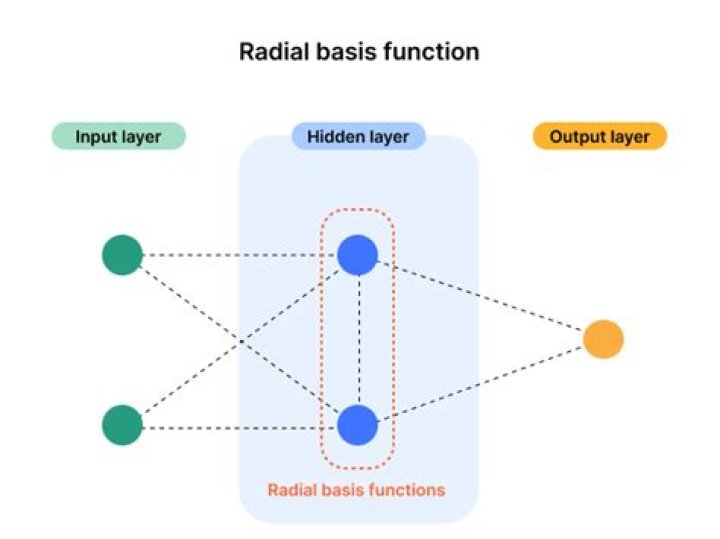
RBF Neural Networks (RBFN) represent a specialized type of neural network that leverages the power of RBF. These networks consist of three layers: input, hidden, and output. The hidden layer contains neurons that apply RBF to the input data, while the output layer combines the results to produce the final output.
RBFN is particularly effective in scenarios where real-time processing is required. Its ability to approximate functions quickly and accurately makes it suitable for applications such as speech recognition, image processing, and financial forecasting.
Compared to traditional neural networks, RBFN offers several advantages:
- Faster Convergence: RBFN converges faster than other neural networks, reducing training time significantly.
- Better Generalization: It exhibits superior generalization capabilities, ensuring accurate predictions on unseen data.
- Reduced Complexity: RBFN requires fewer parameters than traditional networks, simplifying the training process.
Training RBF Neural Networks
Training an RBF Neural Network involves several steps:
- Center Selection: The centers of the RBF neurons are selected based on the input data distribution.
- Width Determination: The width of the RBF neurons is determined to ensure optimal performance.
- Weight Adjustment: The weights connecting the hidden layer to the output layer are adjusted using a suitable optimization algorithm.
Advantages of RBF
RBF offers numerous advantages that make it a preferred choice for many applications:
- Non-linear Modeling: RBF can effectively model non-linear relationships, making it suitable for complex datasets.
- Interpolation Capability: It can perfectly interpolate data points, ensuring accurate representation of the input data.
- Scalability: RBF can handle large datasets efficiently, thanks to its ability to parallelize computations.
- Robustness: RBF is robust to noise and outliers, ensuring reliable performance even in challenging datasets.
These advantages make RBF a versatile tool for a wide range of applications, from scientific research to industrial applications.
Limitations of RBF
Despite its many advantages, RBF does have some limitations:
- Computational Complexity: For very large datasets, the computational cost of RBF can become prohibitive.
- Parameter Tuning: Proper selection of parameters such as centers and widths can be challenging and time-consuming.
- Overfitting: If not properly regularized, RBF models can overfit the training data, leading to poor generalization on unseen data.
However, with careful design and optimization, these limitations can be mitigated, allowing RBF to perform effectively in most scenarios.
RBF vs Other Models
When compared to other modeling techniques, RBF stands out for its ability to handle complex, non-linear relationships. Below is a comparison of RBF with some popular models:
Comparison with Polynomial Regression
While polynomial regression can model non-linear relationships, it often suffers from overfitting and high computational costs. RBF, on the other hand, offers better generalization and scalability, making it a more practical choice for large datasets.
Comparison with Neural Networks
Traditional neural networks can also model complex relationships, but they often require extensive training and tuning. RBF Neural Networks, however, converge faster and require fewer parameters, simplifying the training process.
Applications of RBF
RBF finds applications in a wide range of fields, including:
- Machine Learning: RBF is widely used in SVMs and neural networks for classification and regression tasks.
- Signal Processing: It is used in speech recognition and image processing for pattern recognition and feature extraction.
- Finance: RBF is employed in financial forecasting and risk analysis for its ability to model complex relationships.
- Engineering: It is used in optimization problems and control systems for its robustness and accuracy.
These applications highlight the versatility and effectiveness of RBF in solving real-world problems.
Implementing RBF
Implementing RBF involves several steps, including data preprocessing, center selection, and parameter tuning. Below is a step-by-step guide to implementing RBF:
Data Preprocessing
Before applying RBF, it is essential to preprocess the data to ensure optimal performance. This includes:
- Normalization: Scaling the input data to a common range to improve convergence.
- Noise Reduction: Removing outliers and noise to enhance model accuracy.
Center Selection
Selecting appropriate centers is critical for the success of RBF. Common methods include:
- K-Means Clustering: Using clustering algorithms to identify optimal centers.
- Random Sampling: Selecting centers randomly from the input data.
Parameter Tuning
Tuning parameters such as widths and weights is essential for achieving optimal performance. This can be done using techniques such as cross-validation and gradient descent.
Future of RBF
The future of RBF looks promising, with ongoing research aimed at improving its efficiency and scalability. Advances in computational techniques and hardware are expected to further enhance the capabilities of RBF, making it even more accessible and effective for a wide range of applications.
As machine learning continues to evolve, RBF is likely to play an increasingly important role in developing intelligent systems capable of solving complex problems. Its ability to model non-linear relationships and handle large datasets makes it an invaluable tool for the future of artificial intelligence.
Emerging Trends in RBF
Some of the emerging trends in RBF include:
- Deep RBF Networks: Combining RBF with deep learning techniques to create more powerful models.
- Hybrid Models: Integrating RBF with other algorithms to enhance performance and flexibility.
- Real-Time Applications: Developing RBF-based systems for real-time processing and decision-making.
Conclusion
In conclusion, Radial Basis Function (RBF) is a powerful tool with wide-ranging applications in machine learning and data modeling. Its ability to handle complex, non-linear relationships makes it an essential component of many advanced algorithms. By understanding the principles and applications of RBF, you can unlock its full potential and apply it effectively to solve real-world problems.
We invite you to explore the resources mentioned in this article and experiment with RBF in your own projects. Feel free to leave comments or questions below, and don't forget to