What Is the Difference Between a Possum and an Opossum?
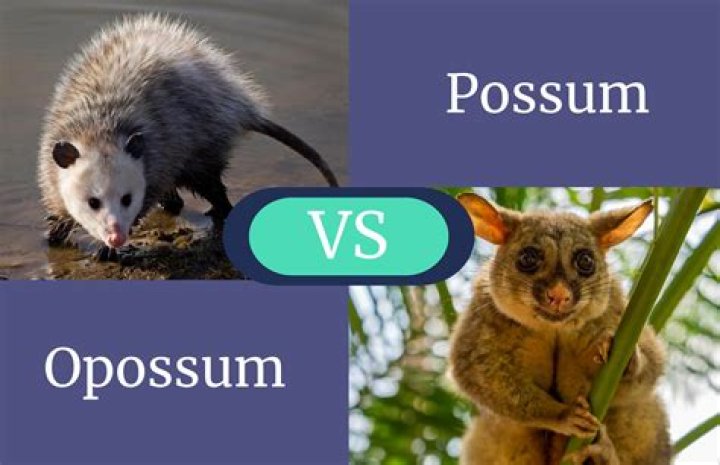
Have you ever wondered what the difference is between a possum and an opossum? These two animals may sound similar, but they are quite distinct in terms of biology, geography, and behavior. Understanding the nuances between them can deepen your appreciation for the diversity of the animal kingdom.
Many people use the terms "possum" and "opossum" interchangeably, but they refer to entirely different creatures. This confusion often arises because of their similar names and appearances. However, once you delve into their characteristics, you'll discover that they belong to separate families and inhabit vastly different regions of the world.
In this article, we will explore the distinctions between possums and opossums in detail. From their physical traits and habitats to their evolutionary histories, you'll gain a comprehensive understanding of these fascinating creatures. So, let's dive into the world of possums and opossums!
Taxonomy and Classification
One of the most fundamental differences between possums and opossums lies in their taxonomy. Possums belong to the order Diprotodontia, which includes marsupials native to Australia, while opossums are part of the order Didelphimorphia, primarily found in the Americas.
Possum Taxonomy
Australian possums are marsupials that belong to the family Phalangeridae. There are over 70 species of possums, each with unique characteristics. Some well-known species include the common brushtail possum (Trichosurus vulpecula) and the ringtail possum (Pseudocheirus peregrinus).
Opossum Taxonomy
Opossums, on the other hand, are the only marsupials native to North America. The most common species is the Virginia opossum (Didelphis virginiana), which is also the largest opossum species. Unlike possums, opossums belong to the family Didelphidae.
Physical Characteristics
The physical differences between possums and opossums are striking, despite their superficial resemblance. These differences reflect their adaptation to distinct environments and lifestyles.
Possum Physical Traits
Possums are typically smaller and more agile than opossums. They have thick, bushy tails and fur that varies in color from gray to brown. Their sharp claws make them excellent climbers, allowing them to navigate trees with ease. Possums also have large, round ears and a pointed snout.
Opossum Physical Traits
Opossums are larger and have a more rat-like appearance. Their tails are long, hairless, and prehensile, which they use for gripping branches. Opossums have a mix of white, gray, and black fur, and their faces are often white with a pointed nose. Their opposable thumbs on their hind feet make them skilled climbers as well.
Habitat and Distribution
The geographical distribution of possums and opossums is a key factor in distinguishing these animals. Their habitats reflect the diverse ecosystems they inhabit.
Possum Habitat
Possums are native to Australia, New Guinea, and surrounding islands. They thrive in a variety of environments, including forests, woodlands, and suburban areas. Some species have even adapted to urban settings, where they can often be seen scavenging for food.
Opossum Habitat
Opossums are found throughout North and South America, with the Virginia opossum being the most widespread species in the United States. They prefer wooded areas near water sources but can also be found in suburban and rural regions. Opossums are highly adaptable and can survive in a range of climates.
Diet and Feeding Habits
The dietary preferences of possums and opossums highlight their ecological roles and adaptations to their environments.
Possum Diet
Possums are omnivores with a diverse diet that includes leaves, fruits, insects, and small animals. Their feeding habits vary depending on the species and availability of food. Some possums are primarily herbivorous, while others are more carnivorous.
Opossum Diet
Opossums are opportunistic omnivores, meaning they eat almost anything they can find. Their diet includes insects, rodents, fruits, and carrion. This adaptability allows them to survive in a wide range of habitats. Interestingly, opossums play a crucial role in controlling tick populations, as they consume thousands of ticks annually.
Behavior and Lifestyle
Understanding the behavior of possums and opossums provides insight into their survival strategies and social interactions.
Possum Behavior
Possums are primarily nocturnal creatures, spending their days resting in hollow trees or burrows. They are solitary animals, except during the breeding season. Possums are known for their agility and climbing abilities, which they use to escape predators and find food.
Opossum Behavior
Opossums are also nocturnal and solitary animals. One of their most famous behaviors is "playing possum," a defense mechanism where they pretend to be dead when threatened. This behavior involves lying motionless, drooling, and emitting a foul odor to deter predators. Opossums are also excellent climbers and swimmers.
Reproduction and Lifespan
The reproductive strategies and lifespans of possums and opossums differ significantly due to their evolutionary paths.
Possum Reproduction
Possums have a relatively short gestation period, typically lasting around 16-18 days. After birth, the young, called joeys, crawl into their mother's pouch, where they continue to develop for several months. Possums can live up to 10 years in the wild, although their lifespan is often shorter due to predation and habitat loss.
Opossum Reproduction
Opossums have one of the shortest gestation periods of any mammal, lasting only 12-13 days. Like possums, opossum joeys develop in their mother's pouch before becoming independent. Opossums have a shorter lifespan, typically living 2-4 years in the wild, due to predation and harsh environmental conditions.
Evolutionary History
The evolutionary paths of possums and opossums reveal the complexity of marsupial evolution and adaptation.
Possum Evolution
Possums are believed to have evolved in Australia around 55 million years ago. Their ancestors were part of the early marsupial radiation that occurred after the separation of Gondwana. Over time, possums diversified into the many species we see today, each adapted to specific ecological niches.
Opossum Evolution
Opossums, on the other hand, are thought to have originated in South America around 65 million years ago. They later migrated to North America via the Isthmus of Panama. Opossums are considered living fossils, as they have retained many primitive traits compared to other marsupials.
Threats and Conservation
Both possums and opossums face threats from habitat loss, climate change, and human activities. Conservation efforts are essential to ensure their survival.
Possum Threats
In Australia, possum populations are threatened by deforestation, urbanization, and introduced predators like foxes and cats. Conservation programs focus on habitat restoration and predator control to protect these iconic marsupials.
Opossum Threats
Opossums in the Americas face challenges such as road mortality, habitat destruction, and climate change. Despite these threats, opossum populations remain relatively stable due to their adaptability. However, continued monitoring and conservation efforts are necessary to safeguard their future.
Interesting Facts
- Possums and opossums are not related despite their similar names.
- Opossums are immune to snake venom, making them one of the few animals that can prey on venomous snakes.
- Possums have a keen sense of smell, which they use to locate food.
- Opossums can hang upside down by their tails, although this behavior is more common in younger individuals.
- Both possums and opossums play important roles in their ecosystems by controlling insect and rodent populations.
Conclusion
In conclusion, the difference between a possum and an opossum goes beyond their names. These animals belong to separate families, inhabit distinct regions, and exhibit unique characteristics. Understanding their biology, behavior, and ecological roles enriches our appreciation of the natural world.
We encourage you to share this article with others who may be curious about the differences between possums and opossums. If you have any questions or insights, feel free to leave a comment below. And don't forget to explore our other articles on wildlife and nature!
Data and information in this article are sourced from reputable scientific journals and wildlife organizations, including the Australian Museum and the National Wildlife Federation.